
Why Hispanic/Latinx Ministry in the UMC struggles—and how faith can respond to fear and division

By Rev. Cruz Edwin Santos, Director of Hispanic/Latinx Ministry, PNW Conference


Sept. 9, 2025 — As I prepare this article for publication, I cannot escape the sense of frustration that comes with witnessing the unprecedented corruption of our judicial system. We now face a Supreme Court fully aligned with the classist, racist, sexist, and homophobic politics of the White House. My reflections echo those of U.S. Supreme Court Justice Sonia Sotomayor, of Puerto Rican descent, who declared: “We should not have to live in a country where the government can seize anyone who looks Latino, speaks Spanish, and appears to work a low-wage job. Rather than stand idly by while our constitutional freedoms are lost, I dissent.”

This is also the painful realization that the Constitution no longer guarantees rights for all. Rights seem to belong only to those of the dominant culture—wealthy, privileged, and backed by millionaire interests. What has become of this nation and its people? Where is the American dream? It feels more like a nightmare—one that makes me rise each day questioning: What am I doing here?

Yet, this political and social reality is also contributing to the growth and development of Hispanic/Latinx ministries and faith communities in The United Methodist Church. As immigrants and their children face discrimination, exclusion, and systemic injustice, the church becomes a sanctuary of hope and belonging. Communities of faith are not only resisting fear but also organizing, growing, and offering a prophetic witness that challenges the structures of oppression.

The Hispanic/Latinx population in the U.S. continues to grow. As of July 1, 2023, there were an estimated 65.2 million Hispanics—over 19.5% of the nation’s population. From 2020 to mid-2023, Hispanics accounted for an astonishing 91% of U.S. population growth.
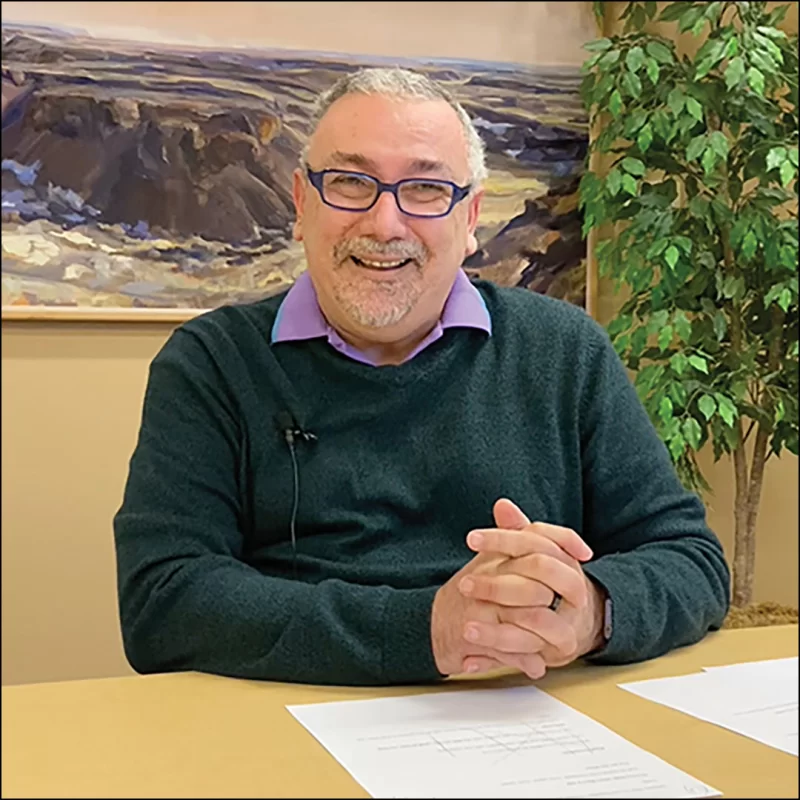
Cruz Edwin Santos

Rev. Cruz Edwin Santos

Yet, the United Methodist Church has not kept pace. Despite the growing Hispanic presence, our ministries remain relatively small, underfunded, and too often treated as temporary “projects” rather than long-term commitments.

This disconnect is rooted in several realities: leadership development remains limited, with fewer than 2% of UMC clergy identifying as Hispanic/Latinx; financial resources for congregations are often unequal; and cultural and linguistic barriers remain strong.

At the same time, the current political climate—marked by anti-immigrant policies, racialized rhetoric, and systemic injustice—is paradoxically giving new urgency and vitality to Hispanic/Latinx ministries. When families live with fear of deportation, separation, and discrimination, churches become sanctuaries of hope, resilience, and advocacy. Ministries that once were seen as “marginal” now carry the sacred responsibility of providing safety, spiritual strength, and prophetic witness during hostility.

We are seeing that political oppression does not silence Hispanic/Latinx communities—it drives them to deepen their faith, gather more intentionally, and build new networks of support. Congregations that were once fragile are becoming stronger precisely because their people need spaces where they are affirmed, protected, and empowered. In other words, the political reality of fear is fueling the spiritual reality of faith.

In this landscape of fear and fragmentation, the church must respond with both compassion and courage. In the Pacific Northwest Conference, we have committed to strategies that embody this response:

  • Leadership Development: Identifying and mentoring Hispanic/Latinx lay and clergy leaders through coaching, education, and pathways to ordination.
  • Community Empowerment: Supporting emerging ministries and partnering with immigrant families to meet immediate needs for safety, housing, food, and legal assistance.
  • Contextual Worship: Creating bilingual and bicultural worship spaces that reflect the richness of Latin American theology, music, and spirituality.
  • Advocacy and Justice: Standing with immigrant families against policies that divide, pressing for humane reforms, and building partnerships with community organizations.
  • Decolonizing Ministry: Elevating Hispanic/Latinx voices into decision-making roles, investing equally in church plants, and ensuring ministries are recognized as full, vital congregations.

Decolonizing Ministry in the UMC

To speak about decolonizing ministry is to recognize that the structures, practices, and even the theology of the church have been shaped for centuries by Eurocentric, colonial models of power. These models often assume that one culture (white, Western, wealthy) is the “norm,” while other cultures must adapt, assimilate, or remain on the margins. In The United Methodist Church, this has too often meant that Hispanic/Latinx congregations are treated as “missions” rather than full churches, with limited decision-making power, unequal resources, and leadership controlled by outsiders rather than the community itself.

Decolonizing ministry calls us to reverse that model. It is about shifting from control to empowerment, from charity to partnership, and from paternalism to mutuality. It means:

  • Centering Hispanic/Latinx voices in decision-making, not as tokens but as leaders shaping the future of the church.
  • Investing resources equally in Hispanic/Latinx congregations, so they are recognized as vital, sustainable communities rather than temporary experiments.
  • Affirming cultural and theological expressions—liberation theology, charismatic spirituality, indigenous practices, bilingual worship, and Latin American liturgical traditions—that reflect the lived faith of the people.
  • Rejecting the “mission field” mentality that positions Hispanic/Latinx people as objects of ministry instead of subjects and agents of their own ministry.
  • Reframing leadership development to include coaching, mentoring, and ordination pathways that are accessible and contextually relevant for Hispanic/Latinx leaders.

At its heart, decolonizing ministry is about reclaiming the truth that God’s image is fully present in every culture and language. The church is not complete without the leadership, creativity, and wisdom of Hispanic/Latinx communities.

By decolonizing, the UMC can move from a posture of hierarchy and dependency to one of mutuality and shared power. It is not simply an administrative adjustment—it is a spiritual act of repentance and renewal. It acknowledges that the church has often been complicit in systems of exclusion, and it boldly proclaims that the Spirit is now calling us to something different: a church where Hispanic/Latinx ministries are not on the margins but at the very center of shaping our collective future.

These strategies are not just programs—they are acts of resistance to fear and bold declarations of faith in God’s justice. They reflect our belief that Hispanic/Latinx people are not merely a mission field, but central to the future of the United Methodist Church. With nearly one in three U.S. children identifying as Hispanic/Latinx, the church’s future is inseparable from this community.

If the UMC is to grow, it must move beyond colonial frameworks and embrace Hispanic/Latinx ministry as equal, vital, and central. It must offer sanctuary—both spiritual and physical—in a time of political hostility and proclaim boldly that immigrant families are beloved of God, not problems to solve but people to be honored, protected, and empowered.

The path forward is clear: through leadership, advocacy, worship, and justice, the church can shift from complicity to compassion, from fear to faith, and from fragmentation to true connection.

Invitation to Celebrate Hispanic/Latinx Heritage Month

Biblical Texts for Worship
  1. Exodus 22:21 – “You shall not wrong or oppress a foreigner, for you yourselves were foreigners in the land of Egypt.”
    God’s command to protect immigrants and a reminder of shared human vulnerability.
  2. Leviticus 19:33-34 – “When a foreigner resides among you in your land, do not mistreat them. The foreigner residing among you must be treated as your native-born. Love them as yourself, for you were foreigners in Egypt. I am the Lord your God.”
    A mandate to love and embrace immigrants as family.
  3. Matthew 25:35 – “For I was hungry, and you gave me food, I was thirsty, and you gave me drink, I was a stranger, and you welcomed me.”
    Jesus identifies himself with the stranger—a reminder of the church’s responsibility.
  4. Hebrews 13:2 – “Do not neglect to show hospitality to strangers, for thereby some have entertained angels unawares.”
    Hospitality is sacred.
  5. Jeremiah 29:11 – “For surely I know the plans I have for you, says the Lord, plans for your welfare and not for harm, to give you a future with hope.”
    A word of hope for tired and fearful families.
Suggested Theme for Hispanic Heritage Month:
  • Leviticus 19:33-34 (justice and solidarity)
  • Matthew 25:35 (welcoming Christ through immigrants)

Together, these texts affirm that immigration is not only a social issue—it is a divine mandate.

Creeds

Both affirm our faith while lifting the unique story and witness of Hispanic/Latinx communities.

Web Resources:

And for those who seek to accompany Hispanic/Latinx communities in their process of development and deeper connection, you may contact:

Rev. Cruz Edwin Santos
Director of Hispanic/Latinx Ministries
cesantos@pnwumc.org
Translate »